William “Bill” and Patsy Porter are part of the first generation of American Arts & Crafts collectors. Both were trained as artists and brought a scholarly approach to collecting objects from the Arts & Crafts Movement. The Porters have long shared a passion for collecting and furnished their first home, built in 1908, primarily with American Arts & Crafts furniture and decorative objects by Gustav Stickley, Charles Rohlfs, Charles P. Limbert, and others, but also with additional 19th and 20th century design examples, which they often acquired for study purposes.
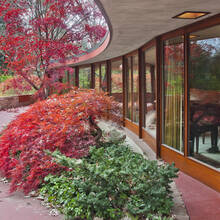
Bill and Patsy met while obtaining Fine Arts degrees from the University of Louisville. Bill went on to receive a Master of Industrial Design degree from the Pratt Institute in New York City, with his focus on improving the design of automobiles. Bill was employed by General Motors from 1957 to 1996, becoming design director for Pontiac One Studio and then Buick Two Studio. Along with their interest in the Arts & Crafts Movement, being students of and promoting good design has been Bill and Patsy’s main focus throughout their lives together. They are recognized for their eye for design and impeccable taste, as well as their ability to blend great old and new designs. Currently, they reside in Michigan in a contemporary home of their own design that showcases the various works in their impressive collection.

Through their willingness to share information and resources, Bill and Patsy have mentored and educated generations of Arts & Crafts collectors. For over forty years, they have generously loaned objects to institutions, beginning with the 1980-1981 exhibit at the Detroit Historical Museum, The Craftsman in Detroit 1901-1916, Porter collection of Gustav Stickley. This exhibition highlighted their personal collection and, in displaying Stickley designs with original finishes, generated a renewed enthusiasm in this essential period of American design. More importantly, this Stickley showcase demonstrated that collectors of even modest means might obtain and furnish their homes with objects from the Arts & Crafts Movement.
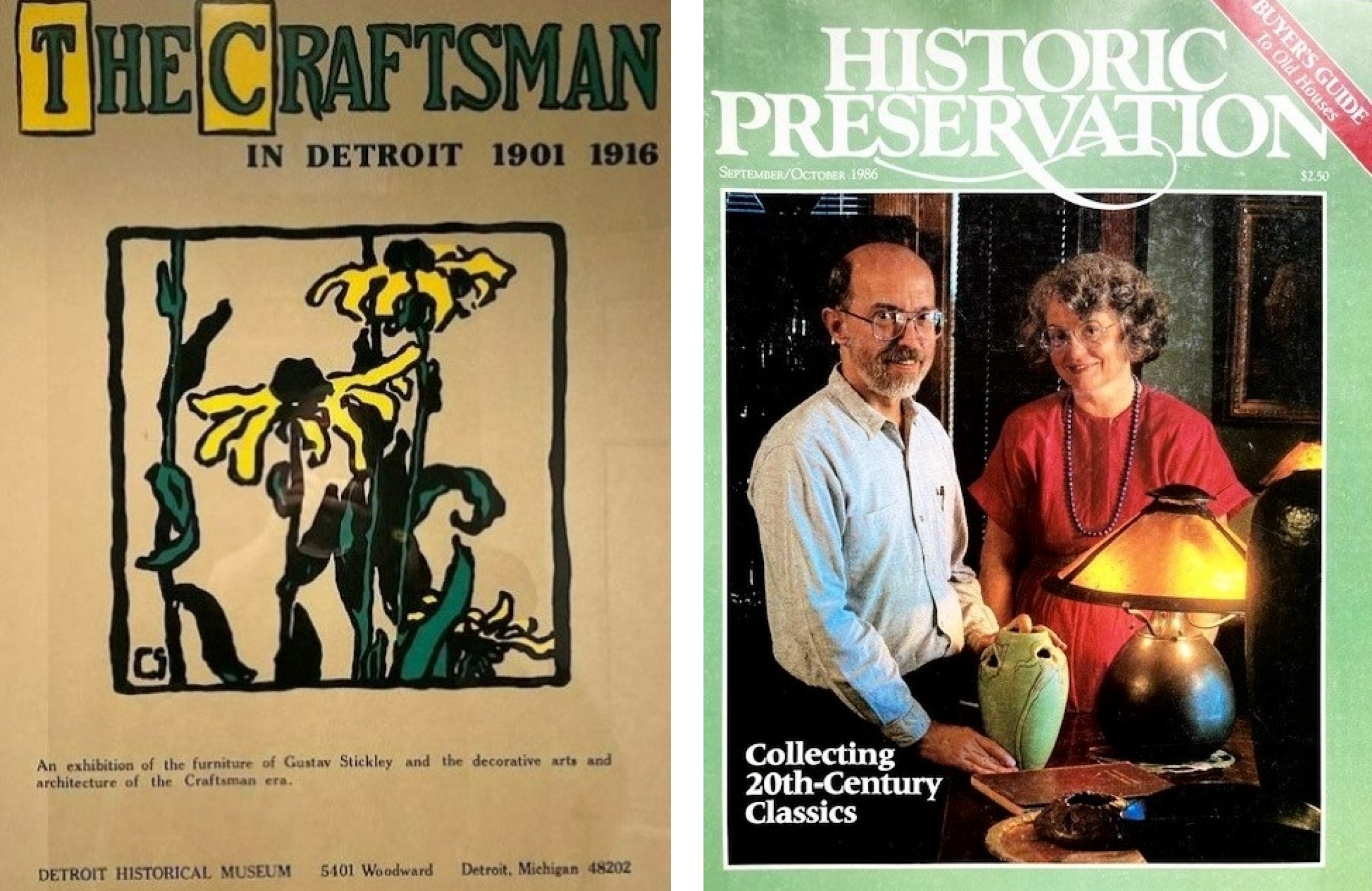
After the success of the Detroit Historical Museum show, the Porters realized that good design is always a good investment. Patsy suggested that Bill use the income from teaching his course entitled “The History of Design Styles” at two Detroit institutions of higher learning, Wayne State University and the College of Art and Design, for ‘mad money’ to continue adding objects to their collection.
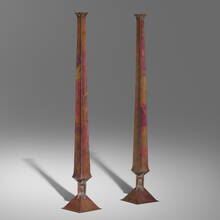
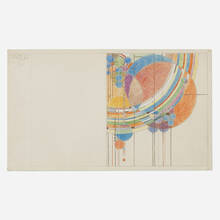
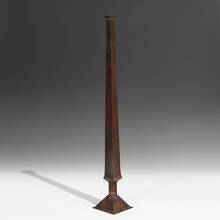
Toomey & Co.'s Early 20th Century Design auction on March 26, 2024 presents a unique opportunity to bid on various works from the Collection of William and Patsy Porter, including several impressive examples from Pewabic Pottery, metalwork from Fred Brosi for Ye Olde Copper Shop and Charles Rohlfs, and Frank Lloyd Wright and Roycroft furniture.
Frank Lloyd Wright 1867–1959
During his seventy year career as an architect, Frank Lloyd Wright created more than 1,100 designs, half of which were realized and a large portion of which came about later in his life. Wright was born in Richland Center, Wisconsin in 1867. He enrolled at the University of Wisconsin in 1885 to study civil engineering, completing only two years of the program. After working for Joseph Silsbee on the construction of the Unity Chapel in Oak Park, Illinois Wright decided to pursue a career in architecture and he moved to Chicago where he began an apprenticeship at the famed architectural firm Adler and Sullivan, working directly with Louis Sullivan until 1893.
After parting ways, Wright moved to Oak Park. Working from his home studio, he developed a system of design developed from grid units and rooted in an appreciation of natural materials that would come to be known as the Prairie School of Architecture and would change the landscape of American design forever. Wright devoted himself to teaching and writing during the 1920s and 1930s. 1935 marked the beginning of an immense surge of creativity and productivity as he began work on his most celebrated residential design, Fallingwater. In the 1940s and 1950s Wright focused on his Usonian designs that reflected his belief in democratic architecture, offering middle-class residential options. In 1943, Wright took on his most demanding commission, the Solomon R. Guggenheim Museum in New York. The museum, which would open its doors six months after his death in 1959, would be called his most significant work.