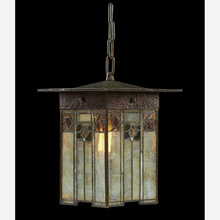
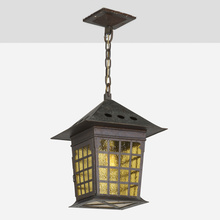
Early 20th Century Design on December 10th features a range of important works sourced from a private, East Coast collection. Showcasing the excellence of leading Arts & Crafts makers, this offering includes particularly impressive examples from Gustav Stickley, Greene & Greene, Charles Rohlfs, and Dirk van Erp. From Stickley, some of the standout lots are a Rare and Early low bookcase, a Director's table, a Chest of drawers, and a pair of Rare two-light sconces. Another historic lighting design in the sale is by the accomplished architectural duo, Greene & Greene; their mahogany Sconce for the Robert R. Blacker House, Pasadena, California has the highest estimate. Charles Rohlfs referred to himself as a designer of "artistic furniture" and the forms available attest to this lofty designation, with his Fine revolving desk, Wall mirror, and Stand each bearing intricate wood carving. Finally, master metalsmith Dirk van Erp's Early and Large table lamp in handwrought copper and mica rounds out this striking selection.


When a man's home is born out of his heart and developed through his labor and perfected through his sense of beauty, it is the very cornerstone of life.
Gustav Stickley
Gustav Stickley 1858–1942
Gustav Stickley, whose name is synonymous with Craftsman furniture, was a visionary American proponent for the Arts and Crafts philosophy in design, literature, and life. At the peak of his career, his furniture was sold throughout the country, Craftsman houses built in many areas, and The Craftsman magazine widely read. After bankruptcy in 1915, Stickley was largely forgotten until the 1970s, when his importance as a designer was rediscovered by a new generation.
The eldest son of first generation German immigrants, Stickley was born into a family that owned furniture-manufacturing businesses. He found inspiration in the writings of John Ruskin and William Morris and the well-built, hand-crafted furniture and the brotherhood of honest labor they espoused. In 1898 he established the Gustav Stickley Company in Eastwood, a suburb of Syracuse, New York. He adopted a William Morris motto, "Als ik kan" ("If I can") and used the symbol of a medieval joiner’s compass as his trademark.
Stickley’s furniture was a radical departure from the American furniture of the Victorian era. Surfaces were unadorned, mortise and tenon joinery and wood grain exposed. The hammered metal hardware underscored the artisanal look of furniture, which was fabricated both by hand and by contemporary woodworking machines.