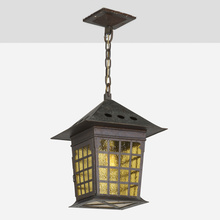
Table features one drawer. Red manufacturer's decal to interior of drawer 'Als ik kan Gustav Stickley' with joiner's compass. provenance: Estate of Ethel Leichti, Oak Park, IL literature:Catalogue of Craftsman Furniture, manufacturer’s catalog, pg. 51
Ethel Leichti and her daughter Ruth Crisler in 1971.
Ethel Leichti was a pioneering collector of mission furniture in the 1960s, while a graduate student at UCLA. She would go on to play a critical role in drawing attention to designer and craftsman Gustav Stickley, beginning with advocating for his inclusion in The Metropolitan Museum of Art's Nineteenth Century America: Furniture and Other Decorative Arts in 1970, and subsequently lending several important pieces for public display. Ethel retired to Oak Park in 2005, where she kept her 1923 brick bungalow fully furnished with Gustav Stickley furniture until her death.
—Ruth Crisler, Ethel's daughter
Display of the pieces lent by Ethel Leichti for the Nineteenth Century America: Furniture and Other Decorative Arts exhibition in 1970 at The Metropolitan Museum of Art, New York. Image from the collection of Ethel Leichti.
When a man's home is born out of his heart and developed through his labor and perfected through his sense of beauty, it is the very cornerstone of life.
Gustav Stickley, whose name is synonymous with Craftsman furniture, was a visionary American proponent for the Arts and Crafts philosophy in design, literature, and life. At the peak of his career, his furniture was sold throughout the country, Craftsman houses built in many areas, and The Craftsman magazine widely read. After bankruptcy in 1915, Stickley was largely forgotten until the 1970s, when his importance as a designer was rediscovered by a new generation.
The eldest son of first generation German immigrants, Stickley was born into a family that owned furniture-manufacturing businesses. He found inspiration in the writings of John Ruskin and William Morris and the well-built, hand-crafted furniture and the brotherhood of honest labor they espoused. In 1898 he established the Gustav Stickley Company in Eastwood, a suburb of Syracuse, New York. He adopted a William Morris motto, "Als ik kan" ("If I can") and used the symbol of a medieval joiner’s compass as his trademark.
Stickley’s furniture was a radical departure from the American furniture of the Victorian era. Surfaces were unadorned, mortise and tenon joinery and wood grain exposed. The hammered metal hardware underscored the artisanal look of furniture, which was fabricated both by hand and by contemporary woodworking machines.
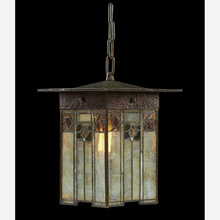
Stickley expanded his activities constantly. He changed the name of his company to The Craftsman Workshops and marketed his product with the brand name “Craftsman”. Ultimately over 100 retailers across the United States represented the brand. In 1903, he announced his “Home Builders Club”. In 1908, he built a great home in New Jersey called Craftsman Farms. In 1909 he formed the Craftsman House Building Company. He was an American success story, a nationally known figure with money, influence and a loving family. In addition to furniture, Stickley published The Craftsman (1901–16), a periodical and his “Bible” for promoting the Arts and Crafts philosophy, his products, and house designs by leading architects.
But Stickley overextended. He leased an expensive headquarters in New York City — the Craftsman Building — to house his empire just before the outbreak of World War I. Interest in the Arts and Crafts movement waned and competition increased, even from his own brothers, all of whom were manufacturing furniture in the Arts and Crafts style. Leopold and John George had established the successful firm of L&J.G. Stickley. Albert, along with John George for a time, ran Stickley Brothers Company. Charles also sold Arts and Crafts furniture.
In 1915 Stickley, deep in debt, filed for bankruptcy. He ceased publication of The Craftsman and sold Craftsman Farms. His brothers brought him into a new venture called Stickley Associated Cabinetmakers, absorbing The Craftsman Workshops. Gustav Stickley moved back to Syracuse where he lived until his death in 1942.
Stay in the loop—check out your Followed Artists & Designers page to see all upcoming
lots featuring your favorites. Plus, we'll send you email updates for each new sale with works by artists and
designers you follow.